5/26 Foundations: Museum or Future?
Hello! You are reading Das Neue Geben with currently 6,481 others. 📖 This issue from Monday, May 18, 2026 has 1,650 words · reading time ~7 minutes
Dear Readers,
I was delighted by the vast feedback regarding my appeal in the last newsletter to finance civil society civically again instead of through the state. It will probably even open a new door in politics.
This week is all about foundations, at the Philea Conference in Copenhagen, at the German Foundation Day in Hamburg – and also in my essay. Paul Simon found the words for it: “I met my old lover in the street last night ...”. The biblical Paul wrote to the Corinthians “Love rejoiceth in the truth”.
Otherwise, a namesake of mine is being celebrated today, advertising for tax-saving foundations is being banned, and the idea of Private Giving is launched with PHINEO.
Sincerely,
Felix
PS: Thanks to everyone who voted for me at the German Startup Awards. On Thursday, May 21, we will know more ...
✍️ ESSAY: The best idea of all time needs an update
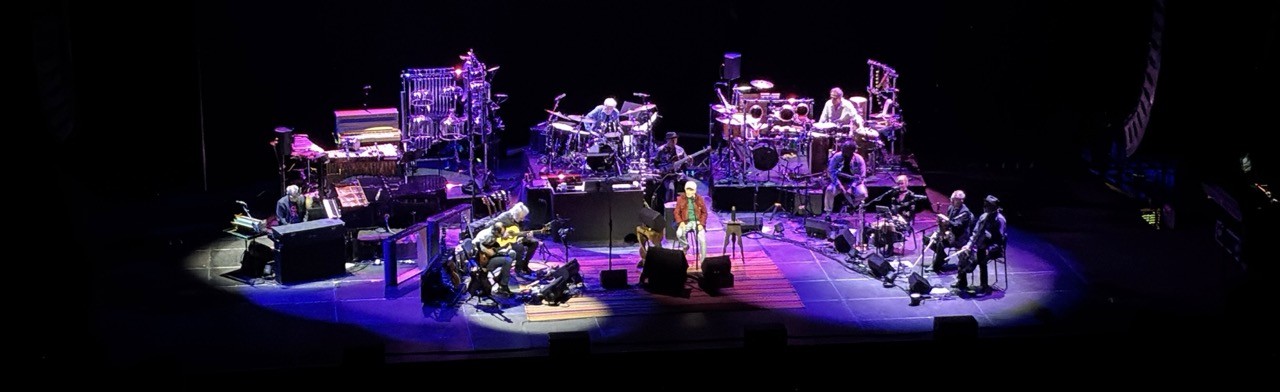
("Still crazy after all these years" Paul Simon at his last concert in Berlin)
I love philanthropy. So much so that I cannot ignore its crisis. Even if it might annoy one or two people in the sector. I am not backing down. I am raising the stakes.
I have experienced philanthropy in front of, on and behind the stage, and have visited more foundations than I can remember. Some old ones have shaped me in particular. The Augsburger Fuggerei, founded in 1521, still inhabited five centuries and several political systems later. The even older St. Catherine's and White Ladies' Foundation in Frankfurt, whose real estate holdings are worth billions. It is never too late for a beautiful past. But philanthropy belongs in the future, not in a museum. Because irrevocably binding assets to a good cause remains an almost radical idea that we need in the 21st century more than ever. For data. For nature conservation. For cultural assets. For everything that an owner's interest with a temporary shelf life cannot protect.
Internationally, especially in the US, criticism of foundations has grown into an entire library over the past decade. Rob Reich and others reject foundations as undemocratic. The philanthrocapitalism debate accuses them of stabilizing inequality instead of promoting real change. Anand Giridharadas accuses founders of being motivated by status and tax savings. This fits perfectly with the tech billionaires who use their foundations to exercise power instead of paying taxes - and subjugate democracies.
This mostly does not fit the German foundation landscape. It is too diverse for this critique. At least four historical layers have accumulated on top of each other: medieval institutional entities like the Fuggerei, the corporate foundations of industrial pioneers, the grant-making foundations of the economic miracle generation, and the family foundations of the most recent wave of heirs. Each follows its own logic, each needs its own standard. I described how the global debate touches these layers on Friday in the Handelsblatt. But complexity does not protect against anger. And at one point, the criticism hits home here too: the line between generosity and self-service is currently barely recognizable from the outside.
Because the foundation has two faces. It is the legal form in which Bosch, Zeiss or Krupp have been organized for generations, and in which family wealth is bound en masse today. In this respect, it is the legal shell of capitalism in its German form. And at the same time, it is the (re-)distribution vehicle with which wealthy individuals irrevocably pass on their capital and can rid themselves of its often personally problematic logic. This dual nature sits at the core of capitalism and its critique. It feeds a “legal-philanthropic complex” of lawyers, tax advisors, and managing directors that lives equally off charitable giving and avoiding inheritance tax. More on this in my TEDx talk “Who Owns Our Wealth” from May 2025.
Therefore, the crucial question for foundations today is: “Is their offer of the eternal binding of capital to a purpose particularly attractive to those who want to hide it, or also to those who want to pass it on?” (Handelsblatt, May 15, 2026)
If philanthropy today wants to be more than just the legal shell of capital, it must address three issues. First, the payout rate (see Handelsblatt “The 1% Industry”, April 30, 2026). On average, the large German grant-making foundations transfer around one percent of their assets per year to funded organizations. In no other industry would such a low impact rate of capital be acceptable. Second, the family foundation. Within a few years, it has become the dominant legal form for incorporation, a successful euphemism for avoiding inheritance tax. It has little to do with what citizens expect from a foundation. Third, the lack of transparency. It prevents this shift in the sector from even becoming visible.
Whether we like it or not: philanthropy lies dangerously close to the defining political fault line of our time, between the winners and losers of a concentration of wealth that is reaching its tipping point in many places. Foundations must decide where they stand. Whether they want to restrict or unleash wealth.
The next generation of asset owners does not care about the debate. They are currently reinventing giving. Because they want to act given the burden of wealth, and must act given the consequences of inaction. Digtal. Transparent. Investment-oriented. Increasingly participatory. Whether they still call it “philanthropy” does not matter to them. But today's foundations should care.
This week, the German Foundation Day meets in Hamburg under the motto “Acting out of freedom”. It should not be about freedom FROM regulations and transparency, but about the freedom TO clarity and change. Ten proposals on this in the November newsletter.
Philanthropy could be many times larger than it is today. Measured by grant volume, not by assets. The best idea of all time does not have much time before a wealth-critical majority banishes it to the museum.
Club Neues Geben
Effective giving is a complex and personal task. The Club Neues Geben offers guidance through networking. No expensive consulting. No fundraising.
Two weeks ago, Maja Göpel shook up a large crowd in the webinar. You can find the insights from the Masterclass in the blog post. Next, we look forward to Ruth von Heusinger and Eckart von Hirschhausen - and in autumn to Katharina Beck MdB for the debate “Private or State?”
The Club Neues Geben is for everyone who commits or wants to commit five-figure financial amounts per year. Feel free to write to katharina.bauch@bcause.com if you are interested or know someone who would benefit from our Masterclasses and personal Deep Dives.
More about the Club Neues Geben
A person who inspires me: Felix Silberzahn
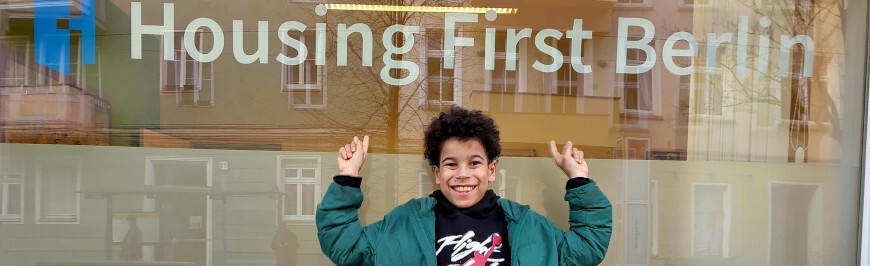
Felix Silberzahn is only eleven and, with his family's small online foundation, is one of our youngest contributors. For three years now, he has been collecting in-kind and monetary donations for the organization Housing First, which quickly and permanently provides homeless people with their own apartment. On April 24, he won the KiKa Award.
As a result, Felix was appointed ambassador of the Federal Association of Housing First. Anyone wishing to support the work toward overcoming homelessness in Germany can donate here.
Child philanthropy has caught my interest for a while. The University of Cambridge study “The little dictator: Understanding altruism in young children” (2025) shows that young children share, help, and act fairly spontaneously, even when no one is watching or when they have to make sacrifices themselves. I think we underestimate how natural generosity actually is, because we only allow children to make their own financial decisions much later.
From personal experience, I can say: my own children's online foundations play a big role for them.
A number that sticks in your mind: 0
“Tax-free, 0 percent with a foundation. Tonight, 7 PM, live.”“Finally, stop giving half of your wealth to the state.” “Sell property to a foundation. Here is how.”
Zero taxes? I come across these ads on LinkedIn, YouTube, and the like. I don't even have to search for the term “foundation”. They are targeted at me – by tax advisors, foundation lawyers, private banks. Even the (non-profit!) Deutsche Stiftungsakademie offers courses on “complex tax law questions” in the “balance between family interests and entrepreneurial capacity to act”.
To be very clear: family foundations have existed long before the Federal Republic, but today they are primarily tax-saving models. In this context, I now mostly encounter the term in entrepreneurial circles. In a WhatsApp group named “Foundations” for entrepreneurs, the discussion is almost exclusively about inheritance and exit taxes. No wonder when charitable giving is communicated bureaucratically and defensively, and private asset protection is marketed aggressively, though up to the professional regulatory limit.
I would like to know if this kind of advertising can be regulated in the same way that is now common for certain financial or gambling advertisements. With mandatory warnings about risks and (societal) side effects. With transparency requirements. Or limitations on social media ads.
And if anyone from the Federal Ministry of Finance (inheritance tax reform), the Federal Ministry of Justice (advertising and professional conduct law for lawyers and tax advisors) or the Center for Protection against Unfair Competition feels responsible (individually against misleading advertisements): feel free to get in touch! I think this is a case for the Alliance for Public Benefit anyway.
bcause for Organization
bcause enables non-profit organizations to collect donations digitally, manage them centrally, access them flexibly – and earn interest on them in the meantime.
135 organizations participated in our webinar on “The Next Fundraising Revolution”. Anyone who missed it or wants to read it again: Here are the notes.
How Sozialhelden or the Sarah Wiener Stiftung use bcause to raise large and small sums with interest instead of Transaction fees can be experienced live at the German Fundraising Congress on June 2 and 3 in Berlin.
Or simply book an online appointment with my colleagues Nicole and Simone .
An idea for further thought: ”Private Banking Giving”
Anyone who earns a six-figure salary or has corresponding amounts in their bank account usually receives individual support and access to special products from the bank. Millions of customers use this largely standardized “Private Banking”.
Personal support for giving was previously only available to the much smaller group of high-net-worth individuals. Andreas Rickert, founder of PHINEO, and I want to change that by combining the expertise of the leading philanthropy consultancy with the digital infrastructure of bcause.
Because, to put it clearly: the lives of most people are busy enough without bothering with establishing their own grant-making organization, dealing with articles of association, annual financial statements, committees, or even personnel costs.
We are launching the new service for the German Foundation Day: PHINEO advises on strategy, identifies recipient organizations, and curates portfolios. And the digital foundation account takes care of collecting, investing, and distributing the funds, completely without contracts, bureaucratic procedures, or long-term commitments.
If desired, for as little as €5,000, you can receive not only a workshop and the setup of the digital foundation, but also complete management by PHINEO.
By the way, the idea is not exclusive: any advisor can also directly implement their clients' strategies in this way.
💡 MORE FROM FELIX
LinkedIn post by Karsten Timmer regarding the wish of a foundation with only €4,000 annual income to convert into a spend-down foundation - and the rejection by the foundation supervisory authority.
My Handelsblatt columns “Germany's multi-billion dollar one-percent industry” (May 1, 2026) and “The foundation idea is stuck in a crisis of trust” (May 15, 2026)
📅 Upcoming Appearances:
May 20/21 Foundation Day, Hamburg
May 21 German Startup Awards, Berlin
May 23 Day of Honor, nationwide
June 2/3 German Fundraising Congress, Berlin
June 3 Summer Reception Club Neues Geben, Berlin (Invitation only)
June 11 EO UNFOLD, Berlin (EO only)
June 19 transform_D, Berlin
June 19 Waterkant Festival, Kiel
July 15 United Philanthropy Infrastructure Summit, Washington/DC
🔍 Needs & Leads
Angel Pledge is seeking allies: Veronika von Heise-Rotenburg starts an initiative with a group of Business Angels where they pledge their exit profits fully or partially for charitable purposes.
The new application phase for startsocial is underway! Until July 10, 2026, social initiatives can apply for one of 100 advisory scholarships and develop further with the support of two business professionals and executives to increase their impact.
“No more €1.50!”: Sozialhelden demand fair payment in workshops for people with disabilities. Together with the Society for Civil Rights, they support strategic lawsuits of workshop employees. The ZDF Magazin Royale reported.
The bcause team loves this picturesque location for offsites: mentioning this newsletter gets you free sauna use and more for bookings in Neupitz near Berlin
Feel free to write to me with your Needs and Leads.
Felix Oldenburg is an initiator in the field of social entrepreneurship and foundations. 🔗 Order the book "Der gefesselte Wohlstand" here 🎧 Or as an audiobook while jogging, cooking, driving... 📱On Instagram and LinkedIn for daily thoughts and discussion starters.
Did you like this issue? 👉 Recommend Das Neue Geben to others and help us grow to 10,000 readers. 📮 Feedback? Write to me at fo@bcause.com 🔔 Whitelist this email so no issue ends up in spam
Felix Oldenburg CEO bcause · Board Member gut.org · Author "Der gefesselte Wohlstand"
Newsletter
So much is written. About everything. Except about giving. Every day I meet people who want to and can give more. Ideas and organizations that make a difference.
In my newsletter, I talk about topics that otherwise remain unexplained: Why people give or don't, which paths and wrong turns they take, how the market of giving works - with surprising numbers, inspiring portraits, and provocative ideas.