Support & Impact
Convertible Donation: A financing method between donations and loans?
Learn, using the example of the project by NIDISI and Pontis Social Impact, how change donations support social organizations as a new form of financing.
—
7 minutes

Whether climate protection, equality, or social justice – the need for funding for impactful and innovative projects is enormous and constantly growing. Donations continue to play a crucial role in securing the daily operations of many organizations. However, the landscape of social organizations and initiatives is also changing – and with it, the possibilities of their financing.
One of these instruments is the so-called convertible donation – a hybrid form consisting of a donation and a loan. But what advantages does it offer for organizations that want to achieve long-term impact? And how do capital providers who prioritize transparency and sustainability benefit?
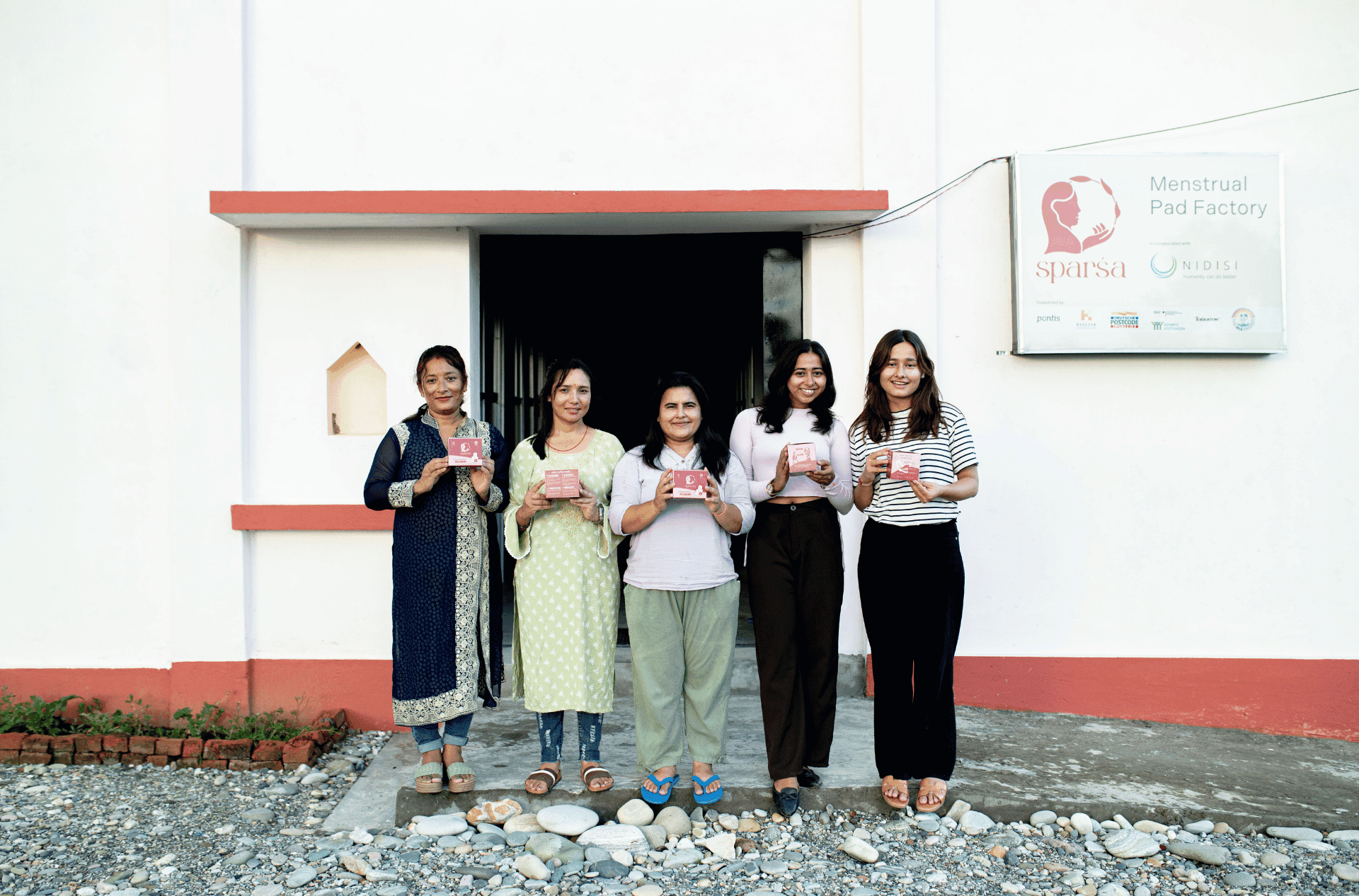
To illustrate the possibilities of the convertible donation, it is worth looking at a specific case: The organization NIDISI, in cooperation with Pontis Social Impact, has set up a production facility in Nepal that manufactures compostable menstrual pads from banana fibers. This project not only solves acute social and ecological problems, but also demonstrates how innovative financing models can create long-term impact and stability.
In this article, we shed light on the theory behind the convertible donation, as well as the pros and cons and the concrete implementation in the case of the NIDISI project. To learn more about the project and the experiences from both the donor and organization sides, we spoke with Fabien Matthias (NIDISI co-founder) and Monika Pieroth (co-founder and co-managing director of Pontis Social Impact).
📚 Table of Contents
Theory: Convertible Donation as a Complementary Financing Model
The Convertible Donation Concept using the Example of NIDISI and Pontis Social Impact
Convertible Donations and other Innovative Financing Approaches
Tips for Organizations and Capital Providers
Conclusion
Theory: Convertible Donation as a Complementary Financing Model
The convertible donation is a hybrid financing instrument that combines the advantages of donations and loans. Organizations initially receive a loan, which is gradually converted into a donation as soon as defined milestones are achieved. These milestones can be project-related results, such as the construction of a production facility, or impact targets, such as achieving certain environmental or social standards.
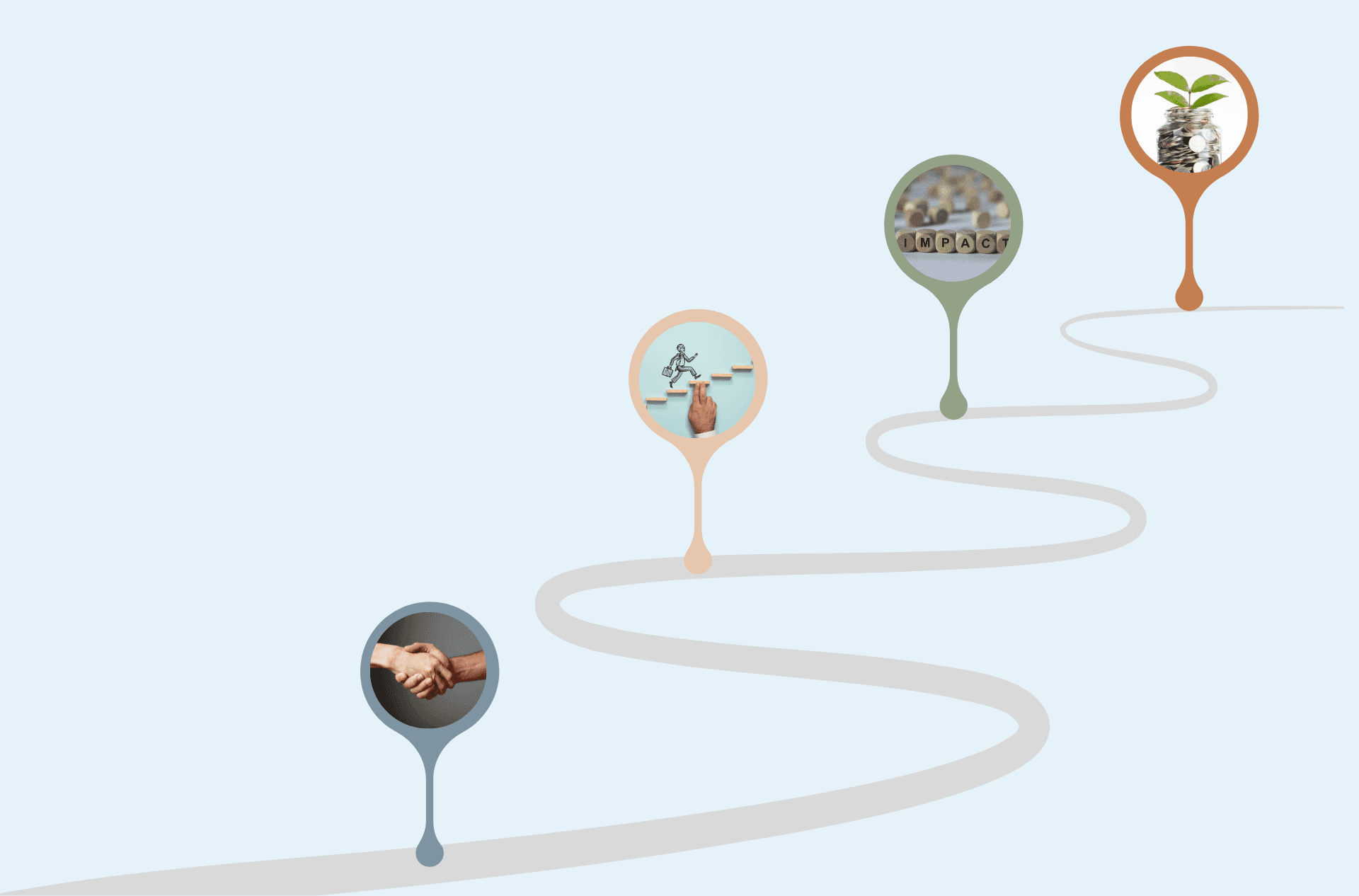
Fig. 1 - How does a convertible donation work? Simplified representation as an infographic
When Convertible Donations Make Sense
Many conventional donation models focus exclusively on project costs. However, particularly in long-term endeavors or in the growth phases of social organizations, these are often insufficient because the donations received do not cover operating costs, investments, or provide flexibility.
"We often see that classic donations are not enough to give organizations the necessary stability and flexibility. A convertible donation creates a balance here between short-term needs and long-term planning," explains Monika Pieroth in conversation.
The convertible donation offers several advantages over classic donations, which are often earmarked for specific purposes:
Planning Security: Linking to clearly defined milestones gives organizations a reliable financial basis for their projects.
Transparency: Capital providers can better track the impact of their support, which builds trust.
Flexibility: Organizations can adapt the funding to their actual needs instead of having to strictly adhere to rigid specifications.
The Convertible Donation Concept using the Example of NIDISI and Pontis Social Impact
The Project: Sustainable Menstrual Hygiene in Nepal
NIDISI, a non-profit GmbH (gGmbH), has made it its mission to address social and ecological challenges with innovative solutions. In Nepal, the organization has set up a production facility for compostable menstrual pads made from banana fibers. This initiative solves two urgent problems:
Health and Hygiene: Many women in Nepal lack access to affordable and hygienic menstrual products. The compostable pads offer a sustainable and affordable solution.
Environmental Protection: Conventional menstrual products generate significant amounts of plastic waste. NIDISI's pads consist of purely natural materials and are fully compostable.

Financing through Convertible Donation
For this project, NIDISI utilized the convertible donation model provided by Pontis Social Impact.
The financing was linked to three clearly defined milestones:
Milestone 1: Construction of the production facility.
Milestone 2: Test production and initial market launch of the pads.
Milestone 3: Demonstration of financial viability through the sale of the products.
"The convertible donation was a perfect solution for us. We were able to reach our milestones step by step and at the same time strengthen our long-term structures," explains Fabien Matthias.
Success Factors of the Convertible Donation
Trust: Through the milestones, capital providers could ensure that their funds were used meaningfully and purposefully.
Long-term Stability: NIDISI was able to cover not only project costs but also operating expenses and overhead – an often overlooked aspect of conventional donations.
Sustainable Impact: The convertible donation enabled NIDISI to develop an innovative and scalable solution addressing both ecological and social challenges in Nepal.
Convertible Donations and other Innovative Financing Approaches
The convertible donation is not an alternative, but rather a valuable complement to classic donations. Especially for projects that pursue long-term impact goals or require support during growth phases, it offers decisive advantages. At the same time, it shows that the landscape of social financing is undergoing change:
New Forms of Social Organizations
Social Enterprises: Organizations like NIDISI combine business models with social impact. With hybrid approaches, they create solutions that are both sustainable and scalable.
Impact Funds: These funds pool capital to invest specifically in projects with social or ecological added value. They link financial success with social responsibility, creating new opportunities for sustainable development.
Through these innovative approaches, flexible models emerge that adapt to the challenges and opportunities of modern social projects.
Expert Assessment: Monika Pieroth, Social Impact Investor
"Our convertible donation for NIDISI shows that it is possible to combine social and ecological goals with sustainable financing models"
Tips for Organizations and Capital Providers
As with many other forms of financing, there is no 'one-fits-all' solution, and there are a few things that can help find the best possible option for both sides.
🏢 For Organizations
Define Clear Milestones: Formulate transparent and verifiable impact goals that make the progress of your projects measurable. This builds trust with capital providers and strengthens the relationship. Important: Remain realistic and do not overpromise.
Include Long-Term Planning: Consider how you can set up your projects to benefit from the flexibility and scalability of the convertible donation. Think beyond operating costs and consider structures that have a long-term impact.
Engage in Communication: Fundraising is a constant challenge that can be tackled better with new and innovative approaches.
🏦 For Capital Providers
Evaluate Fairly and Collaboratively: View the cooperation with organizations as an opportunity to better understand their challenges. A fair and understanding evaluation of milestones strengthens trust and the long-term relationship.
Think Beyond Classic Donations: Use the convertible donation not just to support organizations selectively, but to strengthen them sustainably. This model allows for flexible adaptation to changes without endangering the impact.
Conclusion
The convertible donation clearly shows how innovative financing models can support social organizations in achieving a long-term and sustainable impact. The concrete example of NIDISI demonstrates that these approaches not only create financial security but also foster trust between capital providers and organizations.
"With the convertible donation, we were able to fund not only our production facility but also lay important structural foundations for the future," summarizes Fabien Matthias.
However, even though the convertible donation brings many positive aspects, it is not always the better solution compared to a classic donation. After all, with a convertible donation, donors and organizations work in close exchange to jointly define milestones and details of fund usage. This close coordination can make sense to ensure that funds are used purposefully. However, this is not in every case practical or beneficial. In order to strengthen the work of social organizations in the long term, it is crucial that classic donations are also given with fewer restrictions and with a lot of trust in the organizations' own spending decisions – similar to an investment in a startup. An unrestricted, classic donation can therefore often be just as impactful and give organizations the necessary leeway to work sustainably.
We sincerely thank Fabien Matthias from NIDISI and Monika Pieroth from Pontis Social Impact for the insights and sharing of their experiences.
Sign up for our newsletter and never miss a thing.
⚠️ Disclaimer: We do not provide tax advice. We do not replace a certified tax advisor. All information is provided without guarantee.
Written by

Konrad Kraft