People & Stories
'Those who have more can give more' – Verena Pausder on commitment
Investor Verena Pausder talks in an interview with "Das Neue Geben" about financial independence, education, and social responsibility
—
7 minutes
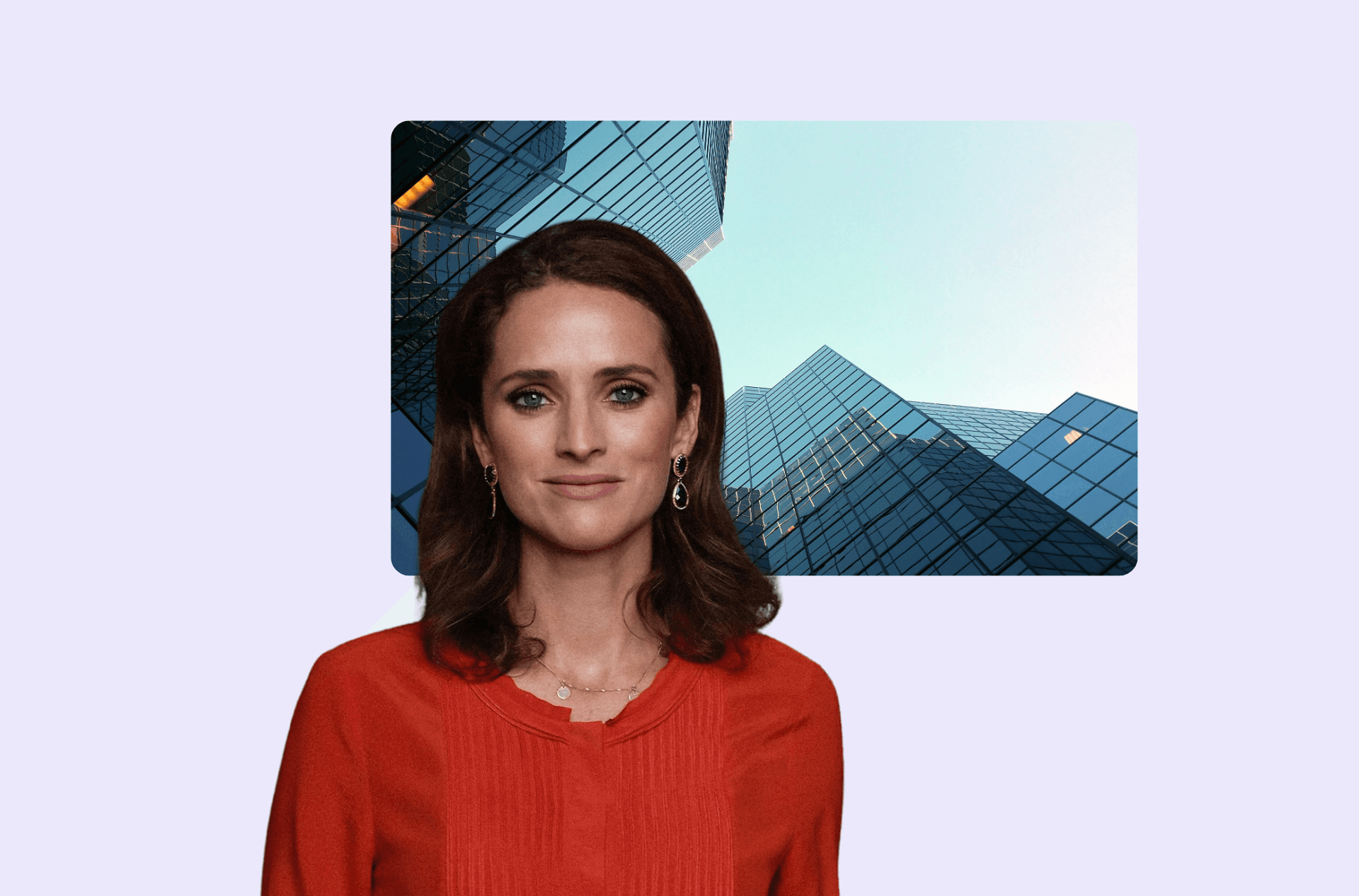
In the podcast “Das Neue Geben”, Felix and Janina talked to Verena Pausder. To improve readability, the conversation has been shortened and adapted in some places. You can listen to the full interview here:
Visionary and leader in the German startup scene
Verena Pausder is an entrepreneur and one of the leading figures in the German startup scene. Since December 2023, she has been the Chairwoman of the Board of the Startup Association and is passionately committed to the future viability of Germany as a business location. As a driving force within the startup scene, she is actively involved in digital education, access to late-stage capital, and contributes to strengthening entrepreneurship, among other things.
In addition, she is a leading voice for digital education in Germany and founded the association Digitale Bildung für Alle e.V. in 2017. In July 2022, Verena took over the women's team of FC Viktoria Berlin in order to sustainably strengthen women's football in Germany. Her book "Das Neue Land" became a Spiegel bestseller, and she hosts the successful podcast "FAST & CURIOUS", which ranks among the top 10 German business podcasts. In 2016, she was named a "Young Global Leader" by the World Economic Forum and was included in Forbes Europe’s Top 50 Women In Tech List in 2018.
Investor Verena Pausder talks in the interview about independence, education, and responsibility
What is your attitude toward money, and has it changed over the years?
From an early age as a child, I had an affinity for saving and investing money. This mainly came from my father, who sent my sister and me to the local savings bank with our coins at a very early age and said: "Use that to buy federal savings bonds". And yet, I believe that upbringing or the parental home only plays a limited role. Because my sister was always the saver and, exaggeratedly speaking, as a child I lived beyond my means. I always had this basic trust: Yes, I will just earn that back somehow. This sometimes put real pressure on me in my life because I realized that my dreams were sometimes bigger than my wallet. Then I just had to run even faster and make up for it. But of course, that also gave me a drive to say, I want to be independent as a woman. I don't want to be dependent on anyone else. And I still have this independence today.
You are an entrepreneur, investor, and association leader. What drives you to be so committed in these different roles?
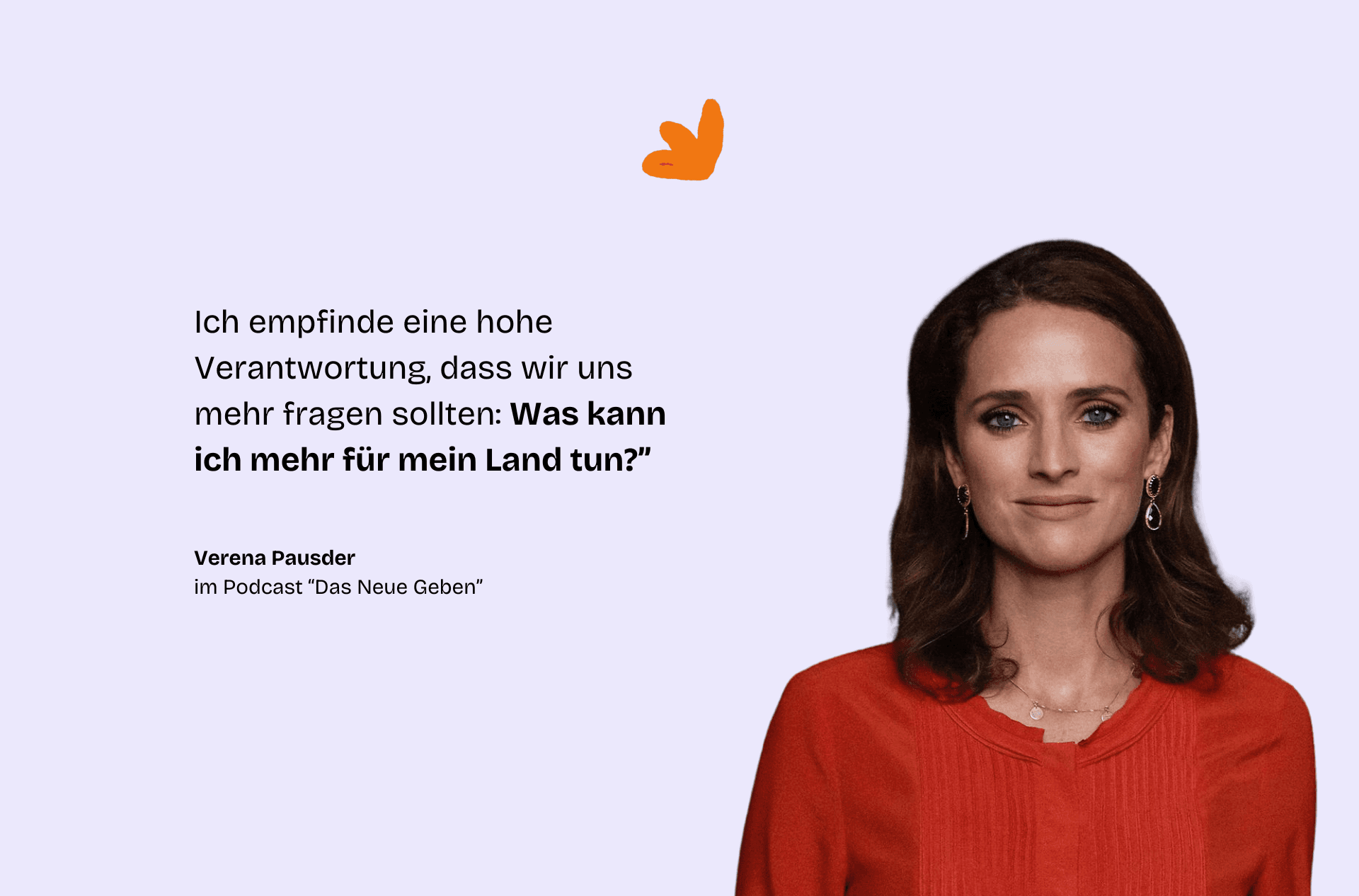
I simply have an incredible curiosity inside me. So when someone comes to me and says, "I have to tell you something really exciting, do you know what innovation is currently breaking through in Germany?" or "Do you know which startup was just founded?", my first impulse is: Tell me. And I feel a high level of responsibility that currently we should ask ourselves more what we can do for our country, rather than just saying what we should actually be entitled to. Of course, I feel this especially because I grew up in a very privileged environment. Not in the sense that we were showered with money, but that education simply played a big role. My parents were healthy. They had the opportunity to spend a lot of time with us and teach us a variety of things. All of this is kind of the reason for me to say: Man, I'm doing really well. Because of that, I might have more energy than others to give something back. I've always had this attitude. I believe that it is a partnership of giving and taking, and that those who have more can also give more.
How has your commitment to social issues changed since you sold your company?
With my exit from Fox & Sheep, the amount of money I commit to has of course increased, as has the number of projects. However, that was not the initial trigger, because I have always felt that responsibility. Since selling my company, I have structured my commitments much more clearly. These include Ashoka, German Dream, HÁWAR.help, my bcause foundations, Digitale Bildung für alle e.V., and Wir für Schule. I could list even more projects where I thought about how to implement them not just as one-off actions, but to achieve a sustainable and long-term impact.
“I want to show that the startup scene feels a sense of responsibility and is socially interested and involved.” - Verena Pausder on her mission in the Startup Association
Is it also part of your mission, as Chairwoman of the Board of the Startup Association, to encourage founders to take responsibility for social problems?
I absolutely see my role as pointing out responsibility beyond one's own company. But a distinction needs to be made here because the startup scene consists of both companies that were founded yesterday and companies that are making their IPO tomorrow. So it wouldn't be appropriate to expect everyone to get more involved socially, because entrepreneurship and founding in this country are great in themselves and we don't have enough of them. And why is this important to me? I come from a family business myself and don't like the distinction between the Mittelstand, which carries the responsibility and is the backbone of our society, and the startups, which are new, young, and wild, make losses, and have to prove themselves first. For me, they are all entrepreneurs who want to drive their respective companies forward with great commitment. That's why I want to show that the startup scene also feels a sense of responsibility and is socially interested and involved. At the same time, I want to highlight the Mittelstand to show that it, too, has been supporting foundations and non-profit initiatives for decades, thereby providing a blueprint. And that is what drives me, when someone starts a company and can afford to get involved socially.
What do we as a society need to learn to perceive the moment wealth is created as an opportunity, rather than as a loss through unjust wealth distribution?
From my perspective, it's not about all of us staying in the middle and having absolutely no outliers upward or downward. Instead, I think to myself, when people donate and give something back, our reflex in Germany shouldn't be: "Why does she even have so much, or does she want to show off with it?". I think we should bring more naturalness to the topic, and we can achieve that by speaking about it naturally. Very often, people think they have to be wealthy to donate and set up foundations. However, with the bcause foundations, I noticed that people get involved if they are given simple opportunities, e.g., through a birthday donation campaign or a display stand at an event. This brings it into the center of society and makes it visible to the general public. In an ideal world, everyone will eventually have their own foundation, and donations will be democratized.
What should everyone who listened to our podcast do immediately to actively contribute to positive change?
Well, I think everything was in there. In principle, the call to action, if you look at the current situation worldwide, is not to freeze in shock and think: "What can I do? I'm just such a small person here in Germany", but to become self-efficacious. Even if it is only in my own very small environment. For those with a larger environment, there are naturally more opportunities. And whether you then start a bcause foundation, volunteer, or enter local politics, the main thing is that you make a contribution if you can. Because a democracy is not something you have, it's something you make. And that is what I wish for all of us.
Achieve more together
💡 Did you know: There is also a newsletter for the blog; you can simply sign up here at the bottom of the page and you won't miss any more issues. If you are interested in what topics the newsletter has already covered, you are in the right place: All issues of the newsletter.
Listen in now!
If you want to hear even more about Verena's views and experiences, you can listen to the complete interview as a podcast. You can find the podcast episode further up or on Spotify.
If you have any questions or comments, feel free to write to us at community@bcause.com.
Sign up for our newsletter and never miss a thing.
⚠️ Disclaimer: We do not provide tax advice. We do not replace a certified tax advisor. All information is provided without guarantee.
Written by

Felix Oldenburg