People & Stories
Sebastian Klein: Why we must act now to solve today's problems
The podcast “Das Neue Geben” welcomes its first guest: Blinkist founder Sebastian Klein talks about money and the responsibility to do good.
—
7 minutes
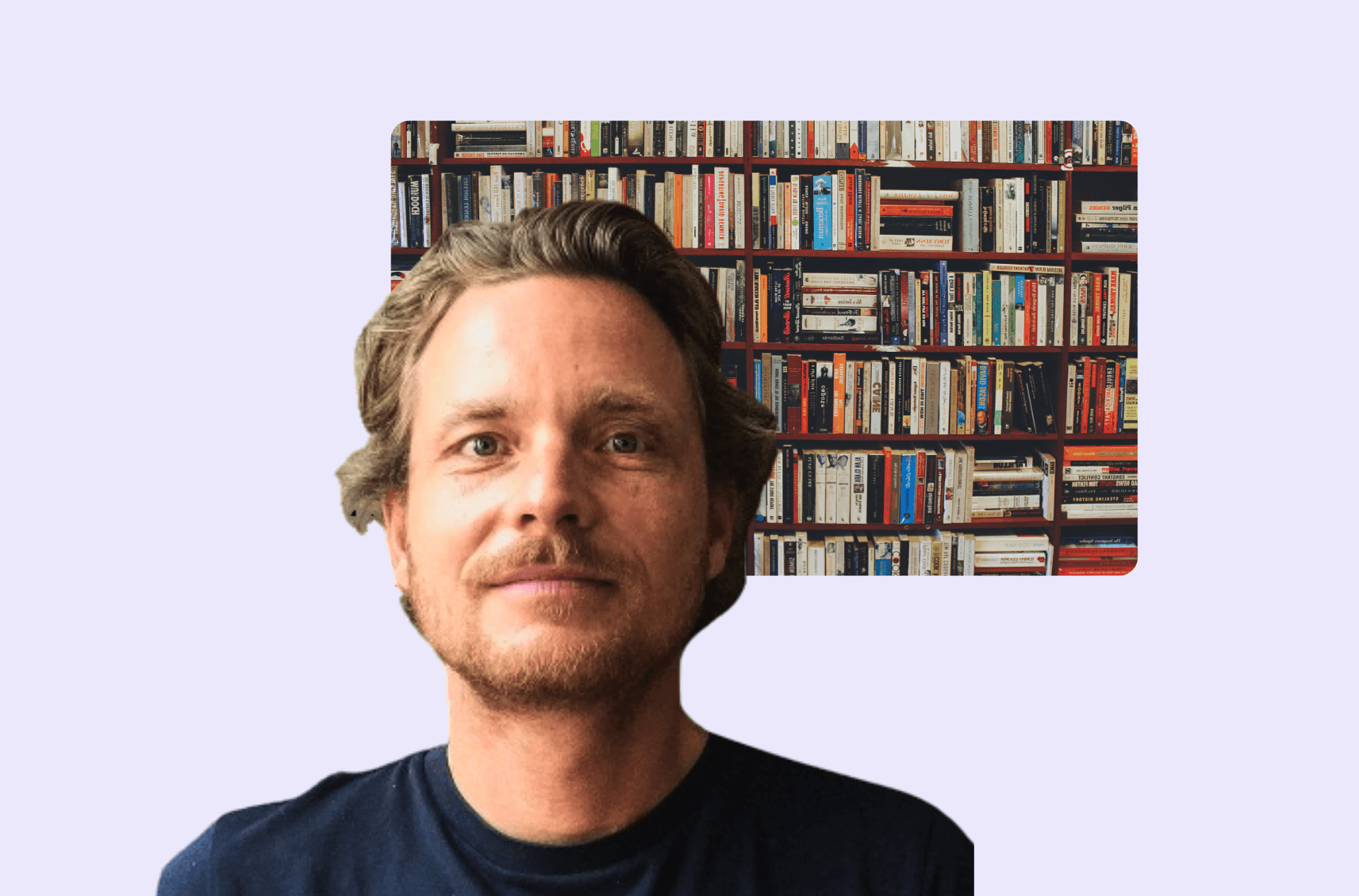
In the podcast “Das Neue Geben”, Felix and Janina spoke with Sebastian Klein. For better readability, the conversation has been shortened and adapted in some places. You can listen to the full interview here:
”Das Neue Geben” welcomes its first guest: Blinkist founder Sebastian Klein
From startup founder to pioneer for systemic impact
Sebastian Klein is a serial entrepreneur, author, and psychologist. He is a co-founder of the platform Blinkist and decided, after the exit, to invest 90% of his private fortune in charitable causes. Furthermore, he participated in building TheDive, where he developed the transformation framework "The Loop Approach" along with the book of the same name. Currently, Sebastian dedicates himself to the future visions of work with the print magazine “Neue Narrative” and the self-organized, human-centered media company NN Publishing. In addition, with his investment firm Karma Capital, he sets new impulses in the financial sector, away from profit maximization and towards the highest possible systemic impact.
Hi Sebastian! You have not only built successful companies, but also invested a large part of your wealth in non-profit projects. How did you actually get in touch with money, and what is your relation to money?
It's best if I start my money story at the very beginning. I only realized late that I grew up relatively privileged. We had our own house and went on vacation every year. My parents were nonetheless frugal, and I always had to work because I also had the disposition to simply spend everything. For me, money was always a means to make fun things possible. In my mid-30s, the moment came when, instead of constantly chasing after money, I suddenly had more available and had to consider: Do I want to invest this in some companies now? What do I actually do with the money? I had read a lot about inequality and had the desire to be part of the solution rather than part of the problem. Personally, I find it shameful to live in such a wealthy country and at the same time see that half of the population has no assets. That is a shocking number. In Germany, this affects about 40 million people, even though we as a country are incredibly wealthy. I would like to change this inequality, also out of self-interest. Because society is worse for all of us if we have such a high level of inequality. In the course of my exit from Blinkist, I therefore decided to give away 90 percent of my private wealth and transfer it into a non-profit structure, where it can hopefully develop a positive impact, but is no longer part of my private wealth.
How did your relationship with money change after the Blinkist exit, and what answers did you find for yourself?
I never had a particularly positive view that it would be in any way better to be rich. However, I must say that I found this feeling of constantly having to run after money to be very unpleasant. Yet, when I was financially more secure, I felt unfree again because I was suddenly constantly wondering whether my money was well-invested and how I could continue to multiply and optimize it. In this respect, I perceive poverty as the significantly worse fate. Nevertheless, it was always important to me to pay attention to what kind of impact the money has. If it is kept at the bank or invested in shares, it does have a certain impact. I also found that thought to be a bit unpleasant, since I am now responsible for ensuring that this money overall has a positive impact and doesn't just end up multiplying my CO2 footprint. Consequently, I decided to transfer my entire private wealth into a non-profit GmbH, reserving the right to withdraw only ten percent from it later as a pension. It is important to me to develop this project together with others to avoid a single person – especially a white man – deciding alone how the money is used in the interest of society. The amount of money is not so large that one could donate significant sums every year over a long period. Therefore, I decided to found a media fund for public-benefit-oriented media companies out of this non-profit structure. The goal is to invest economically, but without profit orientation.
Did you think about investing the three million in such a way that it doubles within ten years, in order to then have a greater impact with six million?
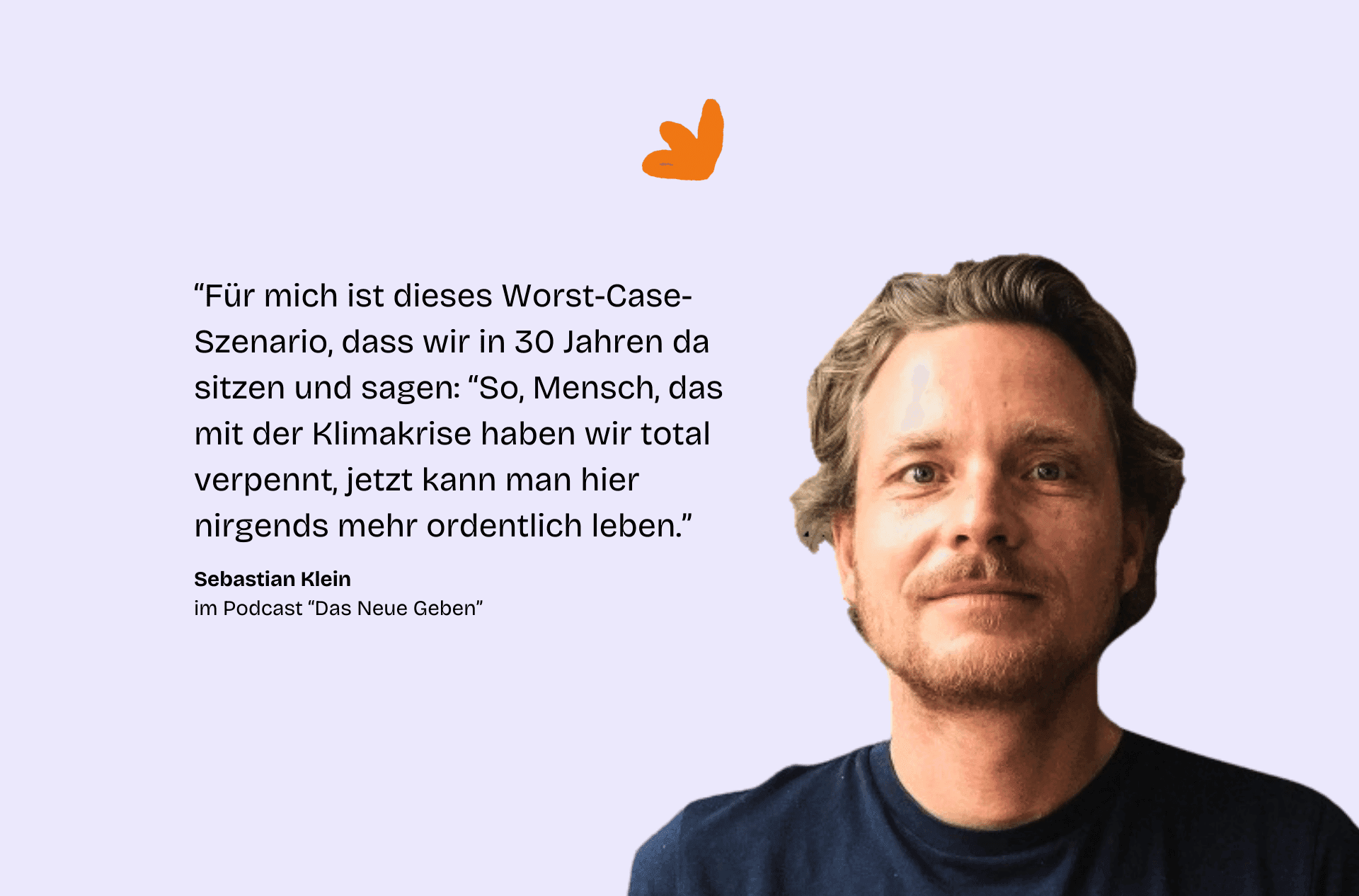
I rather asked myself what the worst-case scenario could be. For me, this worst-case scenario is that we sit there in 30 years and say: “Well, man, we completely blew it with the climate crisis, now you can't live properly anywhere here anymore.” The AfD could have provided the federal chancellor at some point, and I have amassed a nice fortune that I can pass on in such a society. My children would then probably say: “You should have rather given up the money and done more to ensure we have a good foundation for life.” I can understand the thought of investing the money, but for me, it made little sense. We have these problems now and not only in ten years. In our Western culture, “sometime then” is generally an attitude that opposes the pursuit of happiness - we want to be happy now and not just at some point.
It is even worse: According to a study by the Red Cross on the „Cost of Doing Nothing“, it will be two to six times more expensive to solve today's climate problems in the future.
What do you want to have achieved with your money in ten years?
My hope is that in ten years this concept will have become the standard. I call it regenerative capital - capital that aims to have positive impacts on society. This includes not only capital that is donated but also invested. This usually means that yield is foregone, and instead, surplus or generally available capital is invested in organizations. I don't see myself as the one building the new BlackRock, but my hope is that people like me give initial impulses that are then further developed or implemented in other ways by others.
Do you have a tip for people who don't have much money yet but still want to do something good?
What always surprises me is that we have such a large proportion of people who own little or nothing, but do not demand from politicians to ensure fair conditions. With a fair wealth taxation and inheritance taxes, we could ensure that not everyone has the same, but at least somewhat more equal starting conditions. I think that people without economic capital also have a political voice. And that is, from my point of view, the biggest lever to achieve something for oneself.
Moving more together
💡 Did you already know: There is also a newsletter for the blog; you can easily sign up here at the bottom of the page and will never miss an issue again. If you are interested in what topics the newsletter has already moved, you are in the right place: All issues of the newsletter.
Listen in now!
If you want to hear more about Sebastian's media fund and views, you can listen to the complete interview as a podcast. You can also find the podcast episode on Spotify.
For questions and comments, feel free to write to us at community@bcause.com.
Sign up for our newsletter and never miss a thing.
⚠️ Disclaimer: We do not provide tax advice. We do not replace a certified tax advisor. All information is provided without guarantee.
Written by

Felix Oldenburg