People & Stories
Hey Anna, how much money are you allowed to make from the good stuff?
Anna Alex shares in her interview with 'Das Neue Geben' how she combines entrepreneurship and sustainability. Learn more about her vision and projects.
—
9 minutes
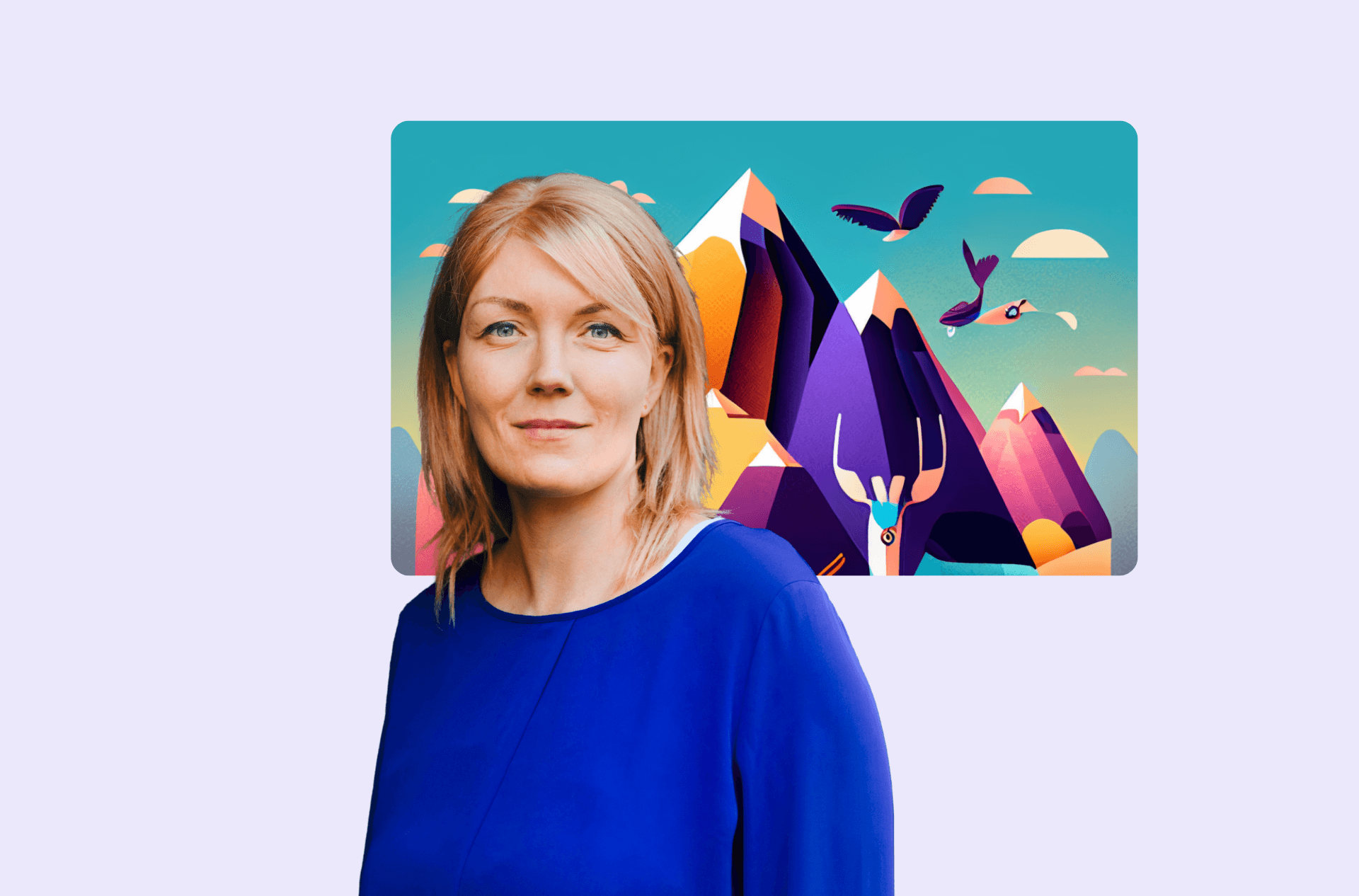
In the podcast “Das Neue Geben”, Felix and Janina talked to Anna Alex. For better readability, the conversation has been shortened and adapted in some places. You can listen to the full interview here:
Visionary between business and nature conservation
Anna Alex is a serial founder, entrepreneur and investor with a clear focus on climate and nature conservation. After studying sociology and psychology in Freiburg and Paris, she started her career as co-founder of the shopping service Outfittery. She later dedicated herself to the topic of sustainability and, together with Benedikt Franke, founded Planetly, a platform for carbon management, which she successfully sold. With her current project Nala Earth, as co-founder, she focuses on biodiversity by making the impact on local biodiversity and nature measurable for companies. As an angel investor in the climate tech sector, she supports innovative projects and, with her foundation, the Wild & Free Animal Fund, supports organizations dedicated to combating factory farming. In addition, Anna is a member of the Advisory Board of the "Young Digital Economy" of the Federal Ministry for Economic Affairs and Climate Action. She was selected as one of Europe's "Inspiring Fifty", one of the "most inspiring women in tech" and in the "Junge Elite - Top 40 unter 40".
Anna Alex talks in the interview about her 'bouquet of commitments'
This way.
Hi Anna! How did your relationship with money evolve, and when did you realize you could use it to create good?
I grew up without financial backing, and as is often the case, money becomes an issue precisely when it is lacking. For me, it became particularly present later on in the startup scene. Back then, it wasn't an established career path yet, and my relatives had major concerns when we suddenly operated in an environment with millions of dollars. Of course, that wasn't my money, but company capital, but that's exactly when I understood that money can be a tool to turn ideas into reality and to create something greater than money itself. This fascinated me and led me to become an entrepreneur – a role I still pursue with passion today.
Later, when I sold my second company, Planetly, my relationship with money changed further. It was the first time I had earned money myself, without the pressure of expectations or inheritances. That gave me a great lightness in dealing with it. Of course, funding rounds in building startups can also be very challenging. From the outside, it often looks like a straight success story that only goes up, but that is rarely the case. Behind every funding round are countless rejections before an investor agrees. Building companies always means highs and lows – and sometimes the lows are quite deep. Nevertheless, right from the start, I worked with investors in all of my companies, as a good business model was just as important to me as a strong purpose that makes the world a bit better. For a long time, I was pretty much alone with this ambition – but that's exactly what motivated me.
“The more resources we have at our disposal, the greater our impact can become.” - Anna Alex on her entrepreneurial approach with Planetly
What do you think, how much money are you allowed to earn by doing good? And what challenges do you face?
I think we first need to become aware of the system we grew up in. A world where giant corporations make huge sums of money, often at the expense of the environment and society, without their methods being questioned. At the same time, non-profit organizations stand there with comparatively tiny budgets and bear the responsibility of saving the world. This imbalance is perceived as normal, but when you take a step back, you quickly realize how absurd it actually is.
Luisa Neubauer put it in a nutshell once: “If some are destroying the world full-time, others cannot save it part-time.” And that's exactly what describes the problem.
Looking back, I discovered my love for entrepreneurship in my first foundations – whether at Rocket Internet or Outfittery. The ability to turn money into a functioning enterprise with a business model thrilled me. But it was always clear to me that my lifetime is more precious than all the money I could earn. It would never have been enough for me to just work towards profit maximization. With Planetly, we tried to combine both: a strong business model and a strong purpose. Because we believe that this combination can do more than either one alone. It's not always easy, and not every social or ecological problem can be solved by a business model. But it works in far more cases than we would have thought ten years ago. Our approach was clear: the more resources we have at our disposal, the greater our impact can become. For this, we had the following motto: Impact = Purpose × Time × Scale. A great purpose is of little use if it is not scaled and remains small in its effect. We took the experiences from the classic startup world and combined them with our values to shape a future that we truly believe is worth living.
“Much of what seems obviously wrong today, such as plastic packaging or the handling of returns, seemed completely normal back then. It was a different mindset, where business and sustainability were often viewed as separate worlds.” - Anna Alex on her time at Outfittery
Did you already try to bring a sustainable mission to Outfittery, or did your focus on impact develop only later?
At Outfittery, the focus was not on sustainability – in retrospect, I thought little about these topics back then. Much of what seems obviously wrong today, such as plastic packaging or the handling of returns, seemed completely normal back then. It was a different mindset, where business and sustainability were often viewed as separate worlds.
The turning point came later: on the one hand, due to the birth of my children, which significantly expanded my planning horizon, and on the other hand, due to a growing self-confidence as an entrepreneur to question existing rules. The idea of Planetly then arose in 2019, when we saw that companies deal very little with their impact on the climate. With our software, we were able to help companies measure their carbon footprint and develop clear strategies for more sustainability. Planetly grew quickly – in two years we worked with 350 companies and had a fantastic team of 250 employees. But after our sale to the USA in 2021, the buyer's plans changed and, unfortunately, led to Planetly being closed a year later. Despite this painful experience, I still stand behind the idea of combining purpose and business model. It has encouraged me to work on this mission again with my new project Nala.
Did you have the feeling after the sale of Planetly that you had to create even more impact with the proceeds now?
Yes, I definitely had that feeling. “Now more than ever” was a clear motivation for me. I think that when people who are impact-driven have a lot of money, they can use it to do meaningful things – often more than others.
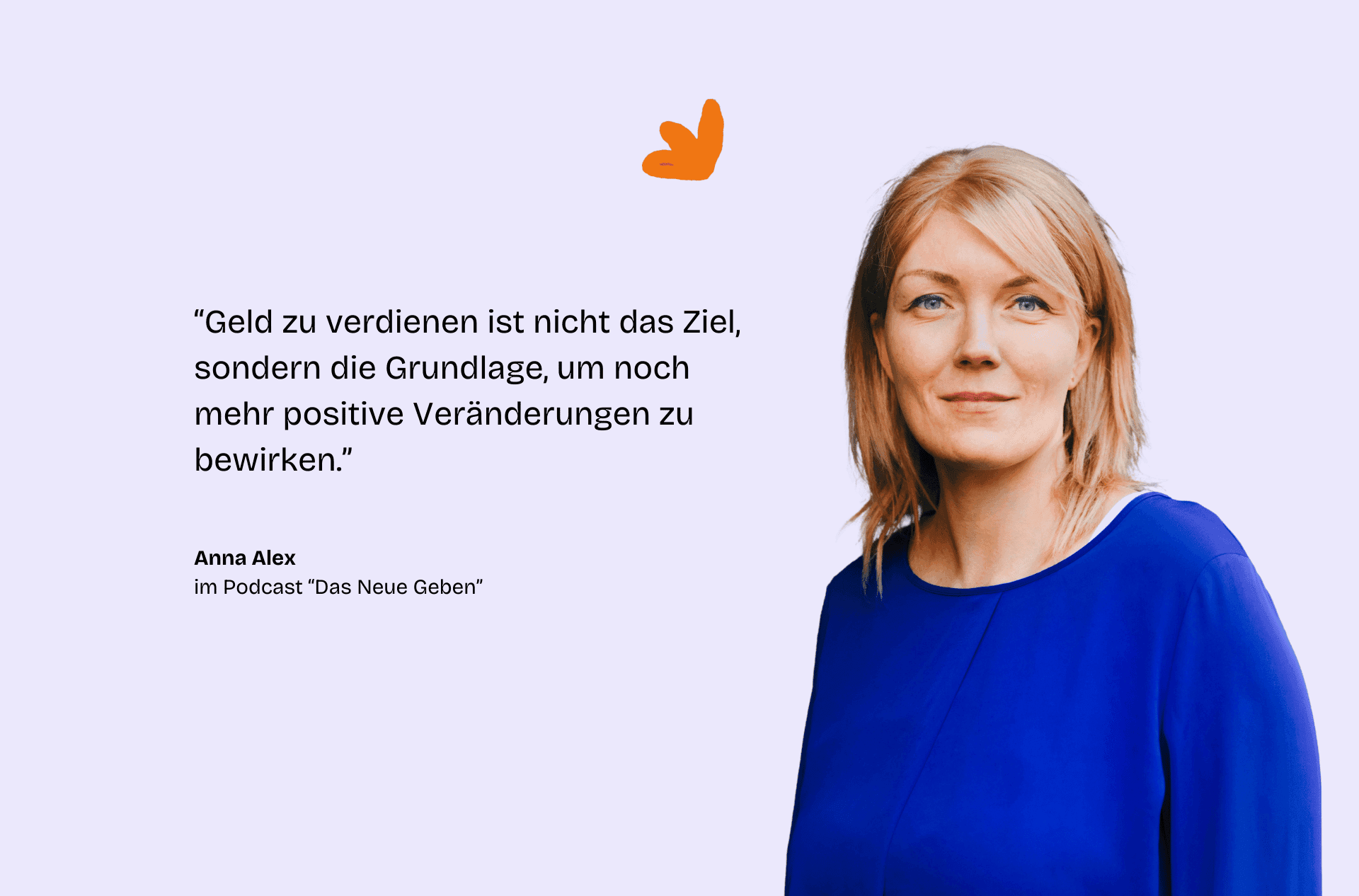
At a conference in England about money, I talked about this with other startup founders. It became clear to me that I wish for exactly these people to get the resources, because I know they will use them to create something good. For me, it was clear from the start: the sale was not an end, but a new beginning. Earning money is not the goal, but the baseline to bring about even more positive changes.
“Just like with the climate, companies also have the greatest leverage in the biodiversity crisis.” - Anna Alex
How did the idea for Nala come about, and how does the Wild and Free Animal Fund fit into your vision?
With Nala, we set ourselves the mission to bring nature to the center of corporate decisions – to make it measurable and economically tangible. Just like with the climate, companies also have the greatest leverage in the biodiversity crisis. The loss of biodiversity is terrifying: in the last 50 years, we have lost about 70% of our animals, insects and birds. This is due, among other things, to pesticides and the fact that we are taking more and more living space away from nature. At the same time, our entire economic activity depends on the services of nature: air purification, water supply, pollination – without them, 70% of our fruit and vegetable varieties would disappear. Parallel to this, I founded the Wild and Free Animal Fund. With this, I support organizations that work to remove livestock from the food chain. One example is the Good Food Institute, which lobbies for vegan alternatives to be allowed to be called "burgers."
I learned that both approaches are needed: for-profit solutions like Nala that scale and create economic incentives, and non-profits like the Wild and Free Animal Fund that address important issues that cannot be solved purely economically. My commitment now resembles a bouquet of flowers: start-up, foundation, advising large corporations and working on the sustainability advisory board of a medium-sized company - I enjoy this diversity very much.
Together for effective animal welfare
💡 Discover the Wild and Free Animal Fund and support Anna's selection of organizations working against factory farming.
To the Wild and Free Animal Fund
Listen in now!
If you'd like to hear more about Anna's commitment and views, you can listen to the full interview as a podcast. The podcast episode on Spotify.
If you have any questions or comments, feel free to write to us at community@bcause.com.
Sign up for our newsletter and never miss a thing.
⚠️ Disclaimer: We do not provide tax advice. We do not replace a certified tax advisor. All information is provided without guarantee.
Written by
Konrad Kraft