Support & Impact
Climate Action: How Impact Investing and Philanthropy Can Complement Each Other
The climate crisis requires swift action. Renewable energies offer a sustainable solution, but many projects need support that goes beyond classic investments.
—
7 minutes
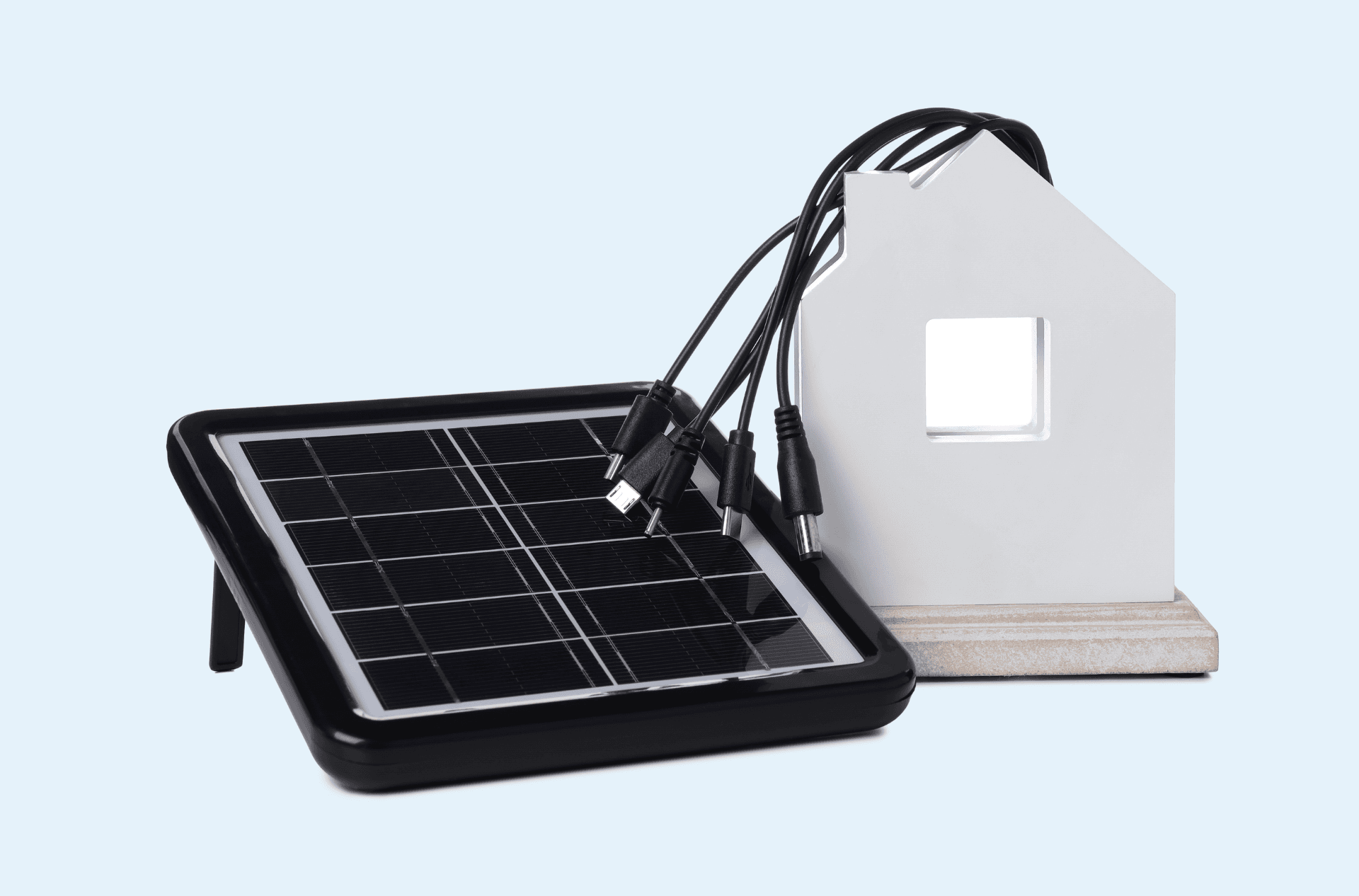
Classical investments alone are not enough to drive the energy transition forward. In this article, we show you why impact investments and philanthropy play a crucial role in enabling projects that otherwise could not be realized.
📚 Table of Contents
Renewable energies as the key to tackling the climate crisis
Impact Investing - more than just a financial return
Philanthropy - why it plays an important role
Specific organizations and foundations to get started
Conclusion: The energy transition is also being advanced by philanthropists
Renewable energies as the key to tackling the climate crisis
The climate crisis affects us all: rising temperatures, extreme weather conditions, and dwindling resources make it clear that we must act now.
The Cost of doing nothing is immense. If we do not take action now, the ecological, social, and economic consequences will become even more drastic and, above all, many times more expensive. Missed climate targets, rising health costs due to air pollution, or the destruction of habitats – this is all the price we pay if we continue to hesitate.
Renewable energies play a decisive role in tackling the climate crisis – they are sustainable, reduce emissions, and create new economic opportunities.
Supporting the right projects – now – is crucial to avoid future, even higher costs and to secure a sustainable, livable future.
Often, significant projects cannot be financed through traditional investments. This is where both impact investing and philanthropy make an important contribution and form a real difference in the long term.
Impact Investing - more than just a financial return
Impact Investments combine social and ecological commitment with financial goals. Your money brings about long-term positive change.
Take solar projects in rural areas as an example: here, facilities are funded that generate clean energy and create jobs. At the same time, they reduce CO2 emissions and provide people with a reliable power supply.
➡️ In this way, impact investing not only creates renewable energy but also perspectives. Especially in structurally weak areas, these projects lay the foundation for long-term change.
🔎 Example: In remote African villages, solar systems improve the quality of life. After sunset, families can work and study, schools employ modern digital teaching methods, and reliance on expensive diesel generators drops. In addition, local technicians are hired to install and maintain the systems.
The beauty of Impact Investments: Even small amounts can achieve a lot. When many people invest in such projects together, sustainable and measurable success is created.
Another advantage: Impact investments create transparency. As an investor, you can understand the effect your support has achieved. This motivates and shows that your contribution is part of a larger whole.
Impact investments build a bridge between traditional financial goals and social responsibility – they combine financial return with measurable, positive change.
With the magical square of investment, the conventional triangular logic (safety, liquidity, and return) is expanded by a fourth dimension (sustainability). Impact investing also pays into this fourth dimension.
Investors no longer have to choose between a good conscience and a good yield: impact investments make it possible to direct capital specifically into projects that aim for both stable financial results and ecological or social improvements. In this way, investment becomes an instrument for active participation.
💡 If you want to contribute specifically to the energy transition, you can find well-founded information on platforms like Erneuerbare Energien Aktuell (EEAktuell). EEAktuell gives you an overview of sustainable investments and projects aimed at a better future. Here you can search specifically for projects that not only focus on green energy but also promote social justice.
Philanthropy - why it plays an important role
Philanthropic engagement also makes a relevant contribution to supporting important projects for tackling the climate crisis.
What actually is philanthropy?
In short: Philanthropy describes the voluntary willingness to contribute to the common good – whether through time, in-kind donations, or money. It is based on the desire to take responsibility for society without expecting anything in return. In this text, the focus is on financial support such as donations.
Why does philanthropy play a role at all?
Quite simply: economic solutions alone fall short. Many of the most impactful projects in the climate and social sectors do not generate a financial profit – not because they are inefficient, but because their benefit is not marketably measurable. They do not create a return on investment in the classical sense, but rather a societal added value, which is reflected in fairer structures, healthier living conditions, or a more stable climate.
Philanthropy closes the gap here: it makes it possible to finance precisely these projects – those that are essential for the common good but could not survive in any market. It is effective where social impact and economic incentives do not overlap.
Many non-profit organizations achieve systemic impact in the area of climate protection with their projects. Learn more about this in our new blog post:
🌏 Enabling systemic climate protection with targeted donations
Donating vs. Impact Investing
Donations and impact investments seem to be opposites at first glance - but let us look closer:
Those who donate want to do good.
Those who make an impact investment do so too – with the difference that the capital is not consumed immediately, but invested effectively. It is about combining financial return with measurable social or environmental impact.
The central question when choosing between a donation and an impact investment is therefore: Do I want to give my money permanently – or use it effectively only temporarily and receive it back later with a possible profit?
Digital Foundations
Anyone who opens a digital foundation on bcause pays into their foundation account by means of a donation and can use their balance not only to support classic charity organizations – but also invest in impact funds or social enterprises, for example. The repayments and interest flow back into the foundation account and enable permanent engagement. They can be used again directly - whether for new investments or to support further donation organizations. In this way, a one-off gift becomes a growing cycle with impact.
You can decide for yourself how you would like to actively support, for example, tackling the climate crisis and expanding renewable energies.
Donating or Funding? A short guide
Are you wondering whether you should donate or start a foundation? Both options have their benefits:
Donations have a fast and immediate effect. They are suitable for projects that need immediate help, such as after natural disasters or for the construction of urgently needed infrastructure such as solar plants.
Foundations act in the long term and sustainably. With a foundation, you can set clear goals and support projects over years, such as the expansion of renewable energies or educational initiatives.
The advantage of a foundation lies in its long-term nature: you have the opportunity to exert influence over years and ensure that your commitment has a long-term impact. However, this advantage comes with a higher level of effort: establishing and managing a foundation requires more planning, more responsibility, and continuous monitoring of how your funds are used. This does not come without costs, bureaucracy, and a lack of flexibility.
🚧 Learn more about hurdles with charitable foundations
Platforms such as bcause, which simplify the path to starting your own foundation, can help.
Specific organizations and foundations to get started
fairafric: The German-Ghanaian company produces organic chocolate made in Ghana. In doing so, fairafric takes fair trade to the next level by building up the entire value chain in Africa. As a result, more than four times as much income remains in the country of origin than when exporting raw materials. With organic cocoa from Dynamic Agroforestry, fairafric also aims to store up to 4x as much CO2 in the soil as is emitted in the entire value chain.
Climate Impact Strategies: Christian Vollmann's digital foundation follows a clear strategy to promote positive climate impact. Here are three key approaches:
You can find more ideas in our blog post, where we present effective organizations in the fight against climate change:
👉🏼 Impactful donations for climate protection
There are countless ways to get active. Whether by supporting small local projects or large international programs – the important thing is that you find the area that is closest to your heart. Even with a small effort, you can make a big impact if you use it in a targeted way.
Conclusion: The energy transition is also being advanced by philanthropists
Whether through donations, digital foundations, or impact investments – your contribution makes a difference.
By getting involved, you actively contribute to the fight against the climate crisis. You support projects that offer long-term solutions and at the same time overcome social hurdles. Every step counts – no matter how big or small it is.
Your next step: Find a project that inspires you. Platforms like EEA or bcause offer you the right information depending on your project and help you find the right path. Start now and become part of the solution for a sustainable future.

This article is an editorial collaboration with Erneuerbare Energien Aktuell.
Sign up for our newsletter and never miss a thing.
⚠️ Disclaimer: We do not provide tax advice. We do not replace a certified tax advisor. All information is provided without guarantee.
Written by

Simone Wetteskind